Is My Tree Going to Fail? 4 Important Signs That I Look for That You Don't.
- David W. Boggan

- 1 day ago
- 5 min read
Updated: 15 hours ago
I want you to think about the last time you really looked at your tree. Not walking past it. Not glancing at it while cutting the grass. I mean, actually stood there and studied it from the roots to the top of the canopy.
Most people never have. Yet these same people will call me and ask if their tree is safe, and they want an answer over the phone.
I can’t give you that answer over the phone. Nobody can, and you should be suspicious of anyone who tries. What I can do is tell you what I look for after inspecting over ten thousand trees, and why the signs that scare homeowners the most are often not the ones that should.
The signs people worry about that usually don’t matter.
Let’s clear the deck first, because fear sells a lot of unnecessary tree removals in this town.
A big tree close to the house. Size alone is not a defect. I’ve seen people terrified of a perfectly sound eighty-foot oak while ignoring the half-dead cherry laurel leaning over the kids’ swing set.
A tree that has always leaned. Trees grow toward light. A tree that leaned its whole life built its wood to carry that lean. Now, a NEW lean is a completely different story. We will get to that.
Squirrel holes and old pruning wounds. These deserve inspection, but a cavity by itself does not condemn a tree. Trees compartmentalize decay. The question is how much sound wood remains around it, and that is a measurement, not a guess.
If someone stood in your yard, pointed at one of these, and told you the tree has to come down, get a second opinion before you sign anything. Preferably from someone who doesn’t own a chainsaw.
The signs that actually keep me up at night.
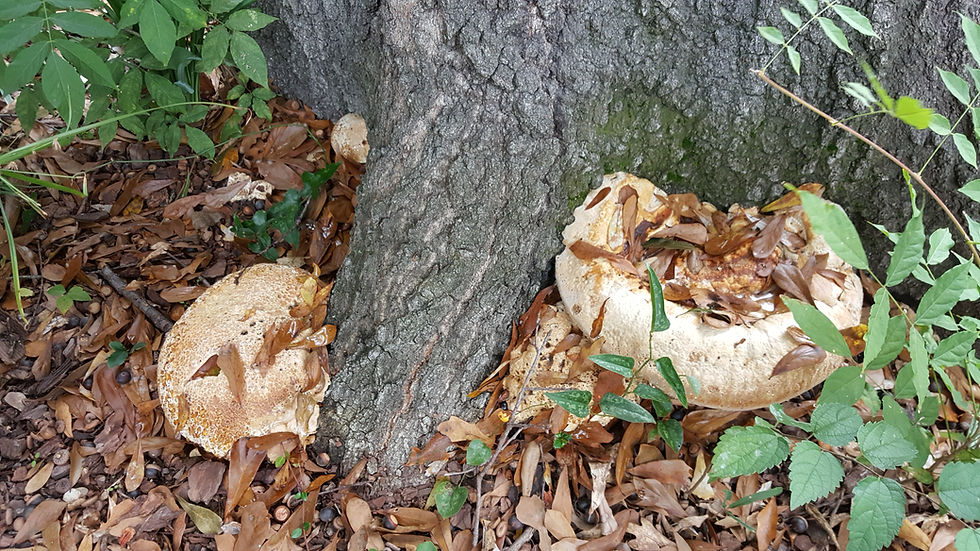
Mushrooms around the base of the tree. Those mushrooms are the fruiting bodies of a fungus. Basically, the fungus is attacking and breaking down the tree's living tissue. The tree is trying to stop the spread of this fungal pathogen by its own chemical defenses. Usually, this occurs on your tree’s roots or lower trunk, which is exactly where the tree anchors itself. People kick them over and forget about them. The mushroom was never the problem. The mushroom, or conk, was visual evidence of a root or basal rot disease.
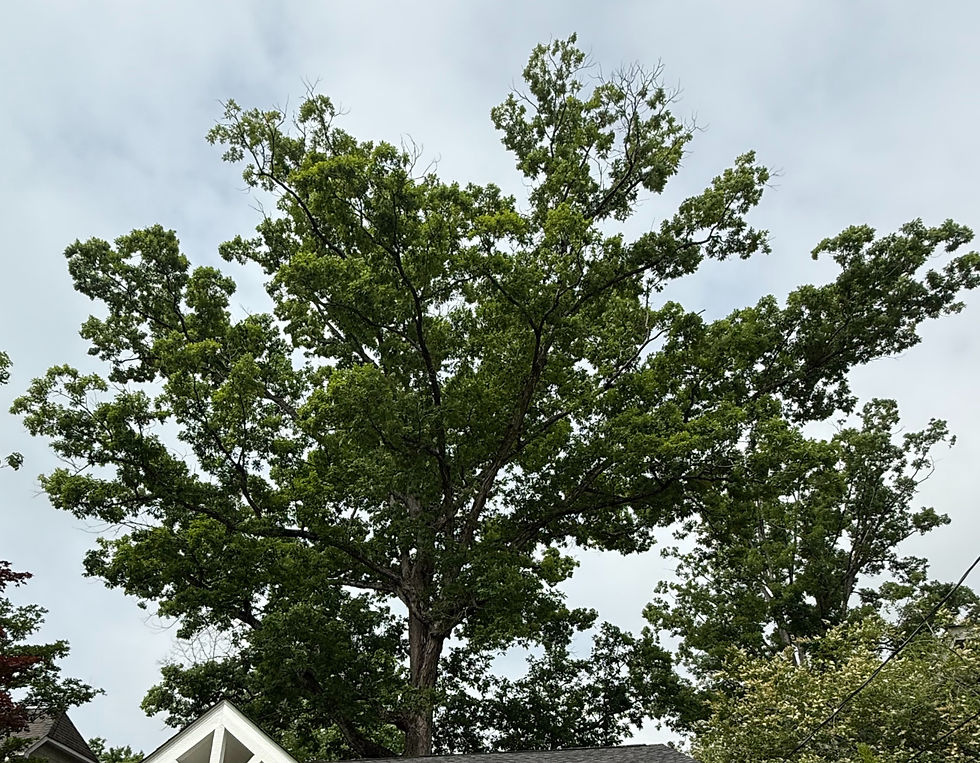
Dead branches or small branch tips die back in the canopy. Go look up into your tree right now. Are there bare limbs with no leaves in the middle of July? Your tree is telling you it can no longer supply its own extremities. That is frequently a root problem announcing itself sixty feet in the air. This is often the first sign of tree decline or stress. Yes, this generally indicates that the root system is having trouble supplying the necessary water and nutrients to the branch tips. If the tree cannot support these branches, it will begin to slowly die back.
When the ground near the base of a tree starts to heave, crack, or pull away on one side. That is the root plate which is the whole anchoring mass of roots and soil the tree stands on starting to lift out of the ground. Of every sign on this list, it is the one I treat as urgent.
Here is something specific to our area. Most of the published research on how trees fail was done in sandy soils. Our soils here are different. They have high percentages of clay and rock, and often either shallow to bedrock or sitting over a dense, restrictive subsoil. Either way, roots have less to anchor into than most tree failure studies conducted in sandy soils.
There is a second thing the soil maps won’t tell you. Most homes here were built by cutting, filling, and grading the lot first. That work strips, mixes, compacts, or buries the natural soil layers and sometimes with construction debris left underneath. So the ground around a tree’s base is often more disturbed, and less predictable, than any soil map would suggest. I don’t assume a tree here will fail the way some tree failure studies say it should, and I don’t assume the soil is what the map says either. I read what’s actually in front of the tree.
When I see fresh soil movement at the base, I take it seriously, regardless of the tree’s size. So should you. This is the one sign on this list that justifies a call the same day.
Anybody digging near your tree within the past five years. Trenching, tunneling, grading, new irrigation, new landscape, a pool, or a home addition, to name a few. Pick one. The tree survives the initial battle, and everyone assumes it’s fine. Then it loses the war three to five years later, long after the contractor got paid and left. You inherited all the consequences. If construction happened near your tree and no one wrote a tree protection plan first, that tree needs eyes on it, even if it looks perfect today.

Here is my problem with how most people handle this.
They ask the lawn crew. They ask their neighbor. They ask the tree removal company that came out “for free.” Getting "free" advice from someone who only gets paid if you say yes is the most expensive advice you"ll ever take.
I’ll be blunt. Asking a tree felling service whether your tree is hazardous is like asking a mortician whether you need surgery. There is a reason the free inspection ends with a removal estimate. That is not an assessment. That is a sales appointment, and the product is fear.
I do second opinions all the time, and I’ve seen it go both ways. Sound, healthy trees cut down over nothing. Genuinely dangerous trees waved off as fine. Either mistake costs you, and one of them can cost you far more than money.
What a real answer looks like.
Tree risk assessment is a system, not an opinion. It follows ANSI A300 Part 9. It considers three things together: how likely the tree or its parts are to fail, how likely they are to hit something if they do, and what the consequences would be. Then it produces written conclusions and mitigation options.
Notice I said mitigation options. Removal is one tool. It is rarely the only one, and when your assessor makes no money for tree removal, you finally get to hear about the others.
I help trees. I do not cut them down. If I tell you your tree is not safe, you can believe me. You’ll know exactly why, and what to do next. I get many calls from clients requesting second opinions on tree removals. About 70% do not need to be removed.
If anything on the second list above describes your tree, stop guessing. Call me at
205-854-3676, and let’s get you a real answer.
David W. Boggan is an ISA Board Certified Master Arborist and Tree Risk Assessment Qualified consulting arborist serving Mountain Brook, Vestavia Hills, Homewood, Hoover, and the greater Birmingham area. He helps trees and does not cut them down. Learn more at alabama-arborist.com
Comments